Tier 1: The benchmark deal
The GPU Offtaker Credit Map · Part 1 of 5. Series: One tier at a time.
The response to our GPU Offtaker Credit Map has been more than we expected. Lenders asked how to use it, operators asked who to sign, and companies asked how to move up. So we are going deeper, one tier at a time.
Each part covers who is in the tier, the deals in the market, how lenders should structure them and how companies get financed on better terms. A tier is not a grade on the company; it tells a lender what structure it needs, and lower tiers are often a visibility problem, not a business problem.
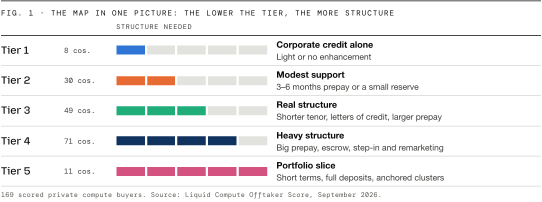
Why start at the top. Tier 1 is the benchmark: the deal a lender gets when the buyer’s balance sheet does all the work. Every structure in the tiers below is a way to get lenders to the same place. That is where most buyers sit, and where the most interesting financing is being done.
Who is in Tier 1
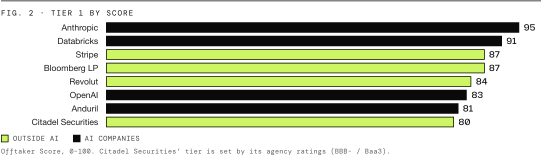
Eight private companies can back a multi-year compute contract on their own balance sheet. (Public hyperscalers sit above all of this.) Half of them are not AI startups at all: a trading firm, two fintechs and a data company that have been profitable for years and now buy GPU capacity at scale.
How they earned it

Tier 1 names score at the top on the things a lender cares about most: revenue scale, fresh capital from deep-pocketed backers, and a long record of paying. Citadel Securities is the only company in the report with an investment-grade agency rating, and the model puts it in Tier 1 on its own inputs too. Databricks ranks second on about $7B of run-rate revenue growing more than 80% and a $5B round in August.
The one thing that separates names within the tier is commitments. Take-or-pay compute contracts are debt in disguise, and lenders underwrite them that way. The frontier labs have signed compute deals worth tens of billions a year. A single new contract is small next to either balance sheet; the whole book of contracts is not.

What these deals look like
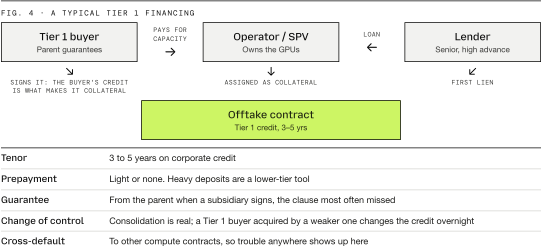
A Tier 1 offtake is the anchor tenant of a compute project. The operator signs a multi-year contract with the buyer, pledges it to a lender, and borrows against the payments. The buyer’s balance sheet does most of the credit work, which is why the structure stays simple.
For lenders
Use Tier 1 as the benchmark. Judge every structured deal below by how close its protections get you to this one.
Lend against the contract, lightly. Over-structuring a Tier 1 buyer loses the deal to a lender who doesn’t.
Advance near the top of the range. The buyer carries the credit, so the operator’s whole build gets cheaper.
Track the book, not the valuation. For the labs, watch total commitments against revenue and fresh capital.
Paper the signing entity. Make sure the guarantee sits with the balance sheet you underwrote.
For companies
This is the benchmark. Terms below Tier 1 are measured against it, and the gap is what structure is for.
Structure is not a penalty. Prepay, reserves and shorter tenors are how most buyers get financed today, and the right structure costs less than equity.
Visibility moves you up. Most lower tiers are a disclosure gap; sharing numbers under NDA can move a company a full tier.
In Tier 1? Your credit is worth money. It lowers the operator’s cost of capital; negotiate for a share of that.
From here, it gets interesting
Tier 1 is the simplest deal in the market. The rest of the series is about everyone else: how lenders get comfortable, and how companies get capital, when the balance sheet needs help.

Part 2 · Tier 2
Where the trading firms landed, and why that is a compliment
Part 3 · Tier 3
Where most buyers sit: prepay financing, letters of credit and shorter tenors doing the work
Part 4 · Tiers 4 and 5
Structure is the product: escrowed capacity, step-in rights, remarketing and price protection
Part 5 · Lenders
What lenders told us, and what changes in the next edition
This note ranks companies from public information only. It is not a credit rating, investment advice or an offer to lend. Tiers describe the structure a lender would typically need, not the quality of a business. Liquid Compute has commercial relationships with some companies in the Credit Map; they did not affect scoring.